Join experts from the Associated Press for two AI courses this fall.
 |
AI Essentials for Content Professionals
Use AI effectively while protecting accuracy, judgment and trust
A two-part online course on Tuesday and Thursday, Oct. 6 and 8, 2-3:30 p.m. EDT
Deepfakes and Generative AI: How to Verify What’s Real
Learn how to authenticate online content
A two-part online course on Tuesday and Thursday, Oct. 13 and 15, 10-11:30 a.m. EDT
For a limited time, register for both courses for $267.54.
For course support, contact ap@edmaker.co.
Online classroom includes:
- Access to live guest speaker sessions
- Recordings of live sessions
- Resources for people just getting started with verification
- Discussion groups for peer support and connection
Discounts
AP member discounts
AP members may email ap@edmaker.co to request a member discount.
Group discounts
Send your team to a course to learn together and receive group discounts. You’ll receive world-class instruction and high-touch customer support.
— 3 to 4 registrants: 10% off per person
— 5 to 10 registrants: 15% off per person
— 11 to 20 registrants: 20% off per person
— 21+ registrants: 25% off per person
You can access group rates at checkout.
AI Essentials for Content Professionals
Use AI effectively while protecting accuracy, judgment and trust
A two-part online course on Tuesday and Thursday, Oct. 6 and 8, 2-3:30 p.m. EDT
AI is becoming a key tool for content creation—but faster is not always better. Which tasks are appropriate for AI assistance? What information is safe to share with a tool? How should you check its output, and when should you tell colleagues, clients or audiences that AI was involved?
Designed for journalists, editors, corporate communicators and public relations professionals, this workshop offers practical guidance grounded in AP’s expertise in accuracy, standards and audience trust.
Through demonstrations, case studies, guided exercises and conversations with AP staff, you will examine where AI can help, where it can create risk and how to make responsible choices in your own work. Between sessions, you will test an AI-assisted workflow relevant to your role and bring your questions and observations back to the group.
By the end of the workshop, you will be able to:
Decide when AI is—and is not—appropriate for a content-related task.
Protect confidential, proprietary and unpublished information.
Evaluate AI output for accuracy, sourcing, bias and quality.
Understand how consumer and enterprise AI tools differ, including how licenses and data settings affect risk.
Determine when and how to disclose AI assistance.
Apply AP-informed principles to your own workflows and team guidelines.
Participants will receive advance materials, practical worksheets and access to session recordings and resources through the online classroom.
Program
All live sessions take place on Zoom, 2-3:30 p.m. EDT. You can join live or watch recordings at your convenience. The online classroom includes all session recordings, asynchronous discussions and other resources.
“Frictionless” Content Creation: The Pros and Cons of Using AI for Content
In this exploration of what AI can and cannot do for content work, Troy Thibodeaux, AP’s director of AI research and adoption, will share use cases from creative fields that show how and when to use AI for content, as well as exactly what not to do. He’ll cover practical AI use cases for content teams and the ways in which the rules for AI use may vary according to the medium (text, photography, video, interactive graphics etc.) or a person’s line of work. “AI tools are focused on reducing friction in our workflow,” says Troy Thibodeaux. “If we let AI command the process, it will become frictionless, but also thoughtless. And we pay the price for that.”
The session will include some tools demos, as well as instructions for prompting for better, safer results. There will be ample time for audience Q&A.
Tuesday, Oct. 6
2-3:30 p.m. EDT
Speaker:
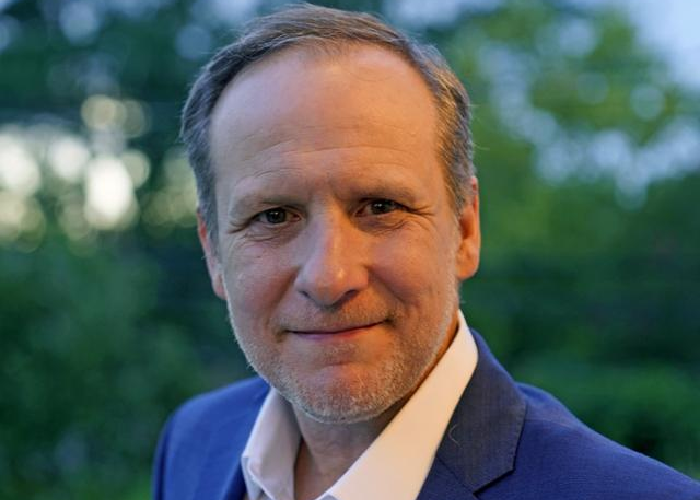
Troy Thibodeaux
Director of AI research and adoption, The Associated Press
Why Standards Matter for AI Use in Content Work
Join Amanda Barrett, AP’s vice president of news, standards and inclusion, for an inside look at how the world’s largest news organization approaches standards and guidance for AI use. She’ll cover the red, yellow, green zones of when to avoid AI, when to use it with caution and when to go for it. She’ll also share how the Associated Press uses AI in its operations, how it oversees quality control over AI outputs and how it ensures a healthy layer of editorial judgment. This interactive session will also cover transparency, disclosure and standards – and how disclosure can be a double-edged sword. The session will close with a look at how guidance on AI use can vary with each content format: text, photography, video and illustration. There will be time for audience Q&A. You’ll leave with ideas on how to establish standards for your personal content work or for your organization.
Thursday, Oct. 8
2-3:30 p.m. EDT
Speaker:

Amanda Barrett
Vice president of news, standards and inclusion, The Associated Press
Deepfakes and Generative AI: How to Verify What’s Real
Learn how to authenticate online content
A two-part online course on Tuesday and Thursday, Oct. 13 and 15, 10-11:30 a.m. EDT.
Seeing is no longer believing. Generative AI has made it faster and easier to create convincing fake images, video and audio, making it increasingly difficult to determine what is authentic online.
In this two-day online course, you will learn how to identify common forms of synthetic and manipulated content, recognize warning signs and conduct essential first-pass checks. You will then apply a step-by step verification workflow, explore tools and techniques for authenticating digital content and learn how to communicate uncertainty when the evidence is incomplete.
Whether you create, review, publish or share digital content, this course will help you evaluate questionable material with greater confidence and make more informed decisions before acting on it.
Program
All live sessions take place on Zoom, 10-11:30 a.m. EDT. The online classroom includes all session recordings, asynchronous discussions and other resources.
Introduction to Authenticating Online Content
The new verification problem
In 2026, verifying user generated content (UGC) has shifted from identifying crudely generated AI video clips and images to assessing highly plausible synthetic and hybrid media. Both audiences and people working with content now encounter a mixture of generative AI images and videos, cloned voices, altered documents and genuine footage presented with false captions. “Real or fake?” is often the wrong opening question. News consumers should consider who created the content, when and where it originated, whether it was altered, and whether it is consistent with the accompanying claim.
Common types of synthetic and manipulated content
Experts from the Associated Press user generated content verification team will present examples of manipulated content - from fully synthetic media to subtler alterations. We will also examine “cheapfakes,” because misleading context, selective editing and false captions can be just as deceptive and consequential as sophisticated deepfakes.
Red flags and first-pass checks
You will learn how to spot red flags as reasons to investigate, not proof of fabrication. We will demonstrate visual indicators such as unstable text and inconsistent reflections or shadows, as well as audio indicators such as distortion or unnatural pacing. We will discuss reverse image search, the cornerstone of the verification process, and the value of identifying original content sources.
Tuesday, Oct. 13
10-11:30 a.m. EDT
Speakers:

Nadia Ahmed
UGC editor, The Associated Press
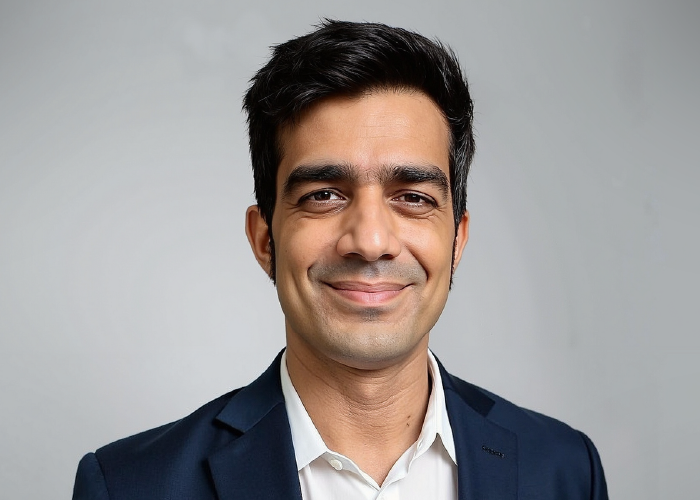
Taimoor Sobhan
UGC producer, The Associated Press
Verification, Authentication Tools and Editorial Conclusions
Verification workflow
Experts from the Associated Press user generated content verification team will teach a repeatable, evidence-led workflow for verification. We will show you how to investigate the source and chain of custody, trace the earliest available upload, reverse-search images and video keyframes, and verify time and location through landmarks, shadows, weather, language and independent reporting.
Tools for authentication
You will learn how LLMs like ChatGPT or Google Gemini can be used for verification workflows. We will introduce C2PA Content Credentials and SynthID watermarks. We will explore how commercial AI detectors and ChatGPT or Gemini workflows should be treated as fallible investigative leads, not editorial verdicts.
Communicating uncertainty
You will learn what to do when absolute verification isn’t possible. We will show you how to report what the evidence supports without overstating certainty, and when to describe content as “verified”, “confirmed synthetic” or “inconclusive”. You will learn to avoid declaring content “fake” solely because a detector produced a high score or because metadata is absent.
Thursday, Oct. 15
10-11:30 a.m. EDT
Speakers

Nadia Ahmed
UGC editor, The Associated Press
Taimoor Sobhan
UGC producer, The Associated Press
Questions? Email ap@edmaker.co.
Produced in partnership with Edmaker Online Learning